
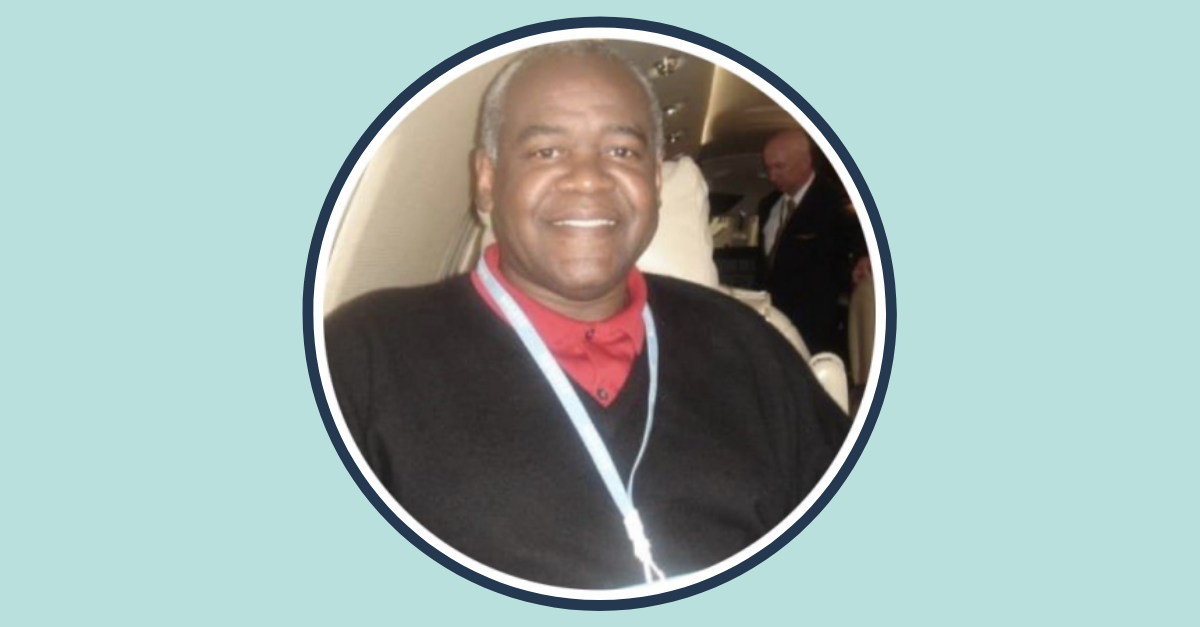
A Century of Squash Connections: From New York to the Field of Dreams with Paul Hendricks
You know who?
I was sitting down for a holiday dinner when a guest turned to me. "I hear you play squash," she said. "I have a relative who plays." When I asked for his name, she replied, "John Nimick." Such is the beautifully compressed world of New York squash.
My family has been adjacent to this subculture for its entire century-long existence. It began with my grandmother, who used her uncanny social mobility to "pass" effortlessly into New York's most elevated circles. Grandmother felt as comfortable with classical music greats like Paul Robeson as she did with members of the Astor family.
For my part, I spent fifty years as a bit of a polymath. Before graduating Engineering School at Michigan, I was an avid tennis player, played hockey on a team whose members earned 6 gold medals in the winter Olympics. I performed as a classically trained singer, a rock/jazz musician and worked as an intern at Bell Labs.
My first coach “may he rest in peace”
When I entered the corporate world, I switched from tennis to squash, prompted by a Penn varsity star who was my training manager at a major computer firm. My first pro was a "squash fundamentalist “a former Downtown NY club pro whose excessive horse-race wagering contributed to his banishment to New Jersey. There, he found a good Italian deli and a willing, if not overly talented, student in me.
New York squash was always a hotbed for unlikely heroes. I participated in many NYC tournaments, and I coined my participation as entering the “tunnel rat” circuit. At one tournament I split refereeing duties with artist Frank Stella. We watched a young kid who learned the game by pure osmosis while sweeping the courts. His first tournament was at the C level but moved with the precision of a seasoned pro, amazing us all.
The coaching worked
Over the years, I have played in various New York tournaments and New Jersey leagues, culminating in a few NYAC Jamborees. NYAC Jamboree was a strict invitational where you were nominated by your local pro. I played in two consecutive years and was a finalist in the second appearance. I’ve won several tournaments in the intervening years but NYAC’s trophy ties for the physically largest trophy I had earned in 37 years.
Squash First
Throughout my tech career, I explicitly requested corporate assignments based on court access—because squash is mandatory. So it was onto Atlanta, Philadelphia, White Plains, Stamford and finally I got to pick my own city since I was elevated to greater responsibilities.
I always loved the process of saving and investing money. I was drawn to the best, so I bought Berkshire Hathaway not as a religion but as one of many systems. One year serendipity struck, Warren’s secretary must have been away from her desk, and I accidentally called Warren Buffett for my AGM credentials. That single call turned into a multi-decade habit of attending dozens of Berkshire Hathaway annual meetings and a few cocktail parties with the man himself.
Start a Business and keep doubles squash first
I eventually left the technology sector after reaching a comfortable peak—managing a multi-billion-dollar corporate responsibility while keeping enough free time to return to the basics of clean hitting that was inculcated in me by my first coach.
In between reading texts on macroeconomics and quantitative trading, I dove into James Zug’s Squash: A History of the Game. I emailed Jim, who happily shared his perspective and firmly recommended I transition to doubles. I haven't looked back since. Malcolm Forbes once quipped, “If you want to be a success in life, pick your parents carefully.” James Zug did; on several occasions, I witnessed his father, Senior JZ, display age-defying agility and sportsmanship on the doubles court.
Eventually, I moved to Virginia. Still young enough to run, I served as a part-time coach at a local prep school, a public gym, and as an assistant for the UVA club team. Within a few years, an enterprising money manager built a massive, state-of-the-art "Field of Squash Dreams" at the Boar's Head Resort, offering a tremendous opportunity to practice hardball doubles.
Many lone hours spent there—specifically in highly focused, 24-minute concentrated practice blocks—Believing the process is always greater than the outcome, I adopted a higher-probability, rules-based strategy by studying the "Warren Buffett of doubles," whose Rye, New York, club is his laboratory of squash excellence.
Virginia’s pristine doubles courts are often lightly used; on any given afternoon, they are just as likely to host raucous games of pre-teen bowling, dodgeball, or tag. The Boar’s Head is a complex social hybrid. It functions as a progressive academic meritocracy where many of those associated with the University pay little regard to sex, race, or creed. At the same time, it provides an insulated comfort zone for folks who feel less than comfortable in a hyphenated world.
Squash Education Alliance
I appointed myself an informal advocate of egalitarianism and squash. As a member of the broader New York Community, a few coworkers learned fencing under the system of Olympian Peter Westbrook. I was entirely familiar with the power of a great athlete, love, and a focus on excellence.
I hosted groups from NY’s Street squash at my home in Charlottesville. In addition, I would host coaches and players from the Baltimore area.
One takeaway from these interactions was the “set up”. In most of the SEA situations a responsible person would describe the student as being “respectful”. On the other hand, if the student athlete did not identify as a POC, a reference to behavior was not ever made. It’s not that I’m advocating for a black John McEnroe of squash but from my vantage point that behavior should not reflect upon someone’s race but someone’s upbringing.
My heart goes out to the SEA kids. They are competitive, brilliant, and dedicated, yet they may eventually realize they aren't going to be fast-tracked into the social networks of exclusive heritage clubs after their early competitive years are behind them. Thirty years from now, they may face the exact same petty indignities I witness today. My ongoing work with the New York Diversity Group remains a small way to lightly tip the scales, ensuring that all people can enjoy this magnificent game and find wonderful companions along the way.
LOVE of squash
I love squash for itself. I love people whose eyes light up when they see a good point. I especially like to see the development of players. I love seeing a short kid beat a giant in the under 14’s. I love seeing a zaftig woman give her all to challenge a thin wraith of a woman in Howe Cup. I love seeing Christina Brownell “bird feeding” balls to her incredibly talented son Timmy. I’m grateful that I’ve played nearly a dozen squash Hall of Famers.
Squash is like family, an uncle at the holiday table. I willingly overlook the occasionally inappropriate comments while realizing I may very well be destined to become this character myself one day.